

Welcome to Vrushti Farmers Producer Co. Ltd
VRUSHTI FPC draws inspiration from the pioneering success of organizations like Sahyadri Farms, Nashik, which transformed the landscape of grape and horticulture farming. Established on the principles of cooperative strength and technological innovation, our company is poised to replicate this model, focusing on two of Central India’s most vital crops: Rice and Bamboo. Our goal is to leverage farmer expertise to build a ₹2000-crore value chain for our members, just as Sahyadri Farms did starting in 2002.
Vision: The Golden Era of the Farmer
The age of unchecked corporate dominance is fading. We stand at the dawn of a Golden Period for Farmers, where the true value of farm produce is recognized and rewarded. VRUSHTI FARMERS PRODUCER CO. LTD. is built on the belief that ownership, innovation, and direct market access will usher in the era of the Farmers Producer Company (FPC), driving product prices up and ensuring prosperity for its members.
Our Foundation: Inspired by Innovation
VRUSHTI FPC draws inspiration from the pioneering success of organizations like Sahyadri
Farms, Nashik, which transformed the landscape of grape and horticulture farming.
Established on the principles of cooperative strength and technological innovation, our
company is poised to replicate this model, focusing on two of Central India’s most vital
crops: Rice and Bamboo. Our goal is to leverage farmer expertise to build a ₹2000-crore
value chain for our members, just as Sahyadri Farms did starting in 2002.
Our Core Verticals: Bamboo And Rice
VRUSHTI FPC operates with two primary, high-value verticals:
- Bamboo: The centerpiece of our innovation strategy, embodying our unique “Womb to Tomb” philosophy.
- Rice (Paddy): Focusing on quality, sustainable cultivation, and direct sourcing of premium rice varieties grown by our member farmers.
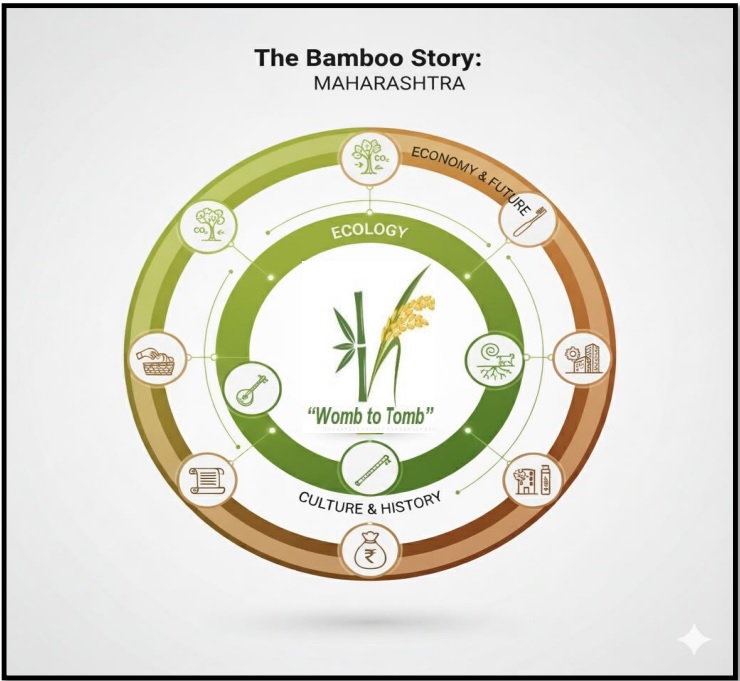
The Bamboo Philosophy: "Womb to Tomb"
This is more than a slogan; it is a literal, comprehensive commitment to utilizing bamboo
across the entire spectrum of human life, transforming it from “poor man’s timber” into a
premium, lifestyle material
| Stage of Life | Bamboo Application | Value Proposition |
| Womb (Prenatal & Neonatal Nutrition) | Edible Bamboo Shoots (Nutraceuticals), Bamboo Leaf Tea, and Extract-based supplements. | Provides high fiber, low-fat, and mineral-rich nutrition essential for maternal health and early childhood development, positioning bamboo as a wellness food. |
| Life (Daily Consumption & Structure) | Bamboo-based construction, furniture, engineered flooring, high-value consumer goods (toothbrushes, textiles), and paper/pulp. | Supplies sustainable, durable, and eco-friendly alternatives for housing, industry, and daily living, reducing dependence on wood and plastic. |
| Tomb (Final Rites) | Bamboo lumber and products for creating eco-friendly, fastgrowing, and sustainable wood alternatives for funeral pyres and caskets. | Offers a dignified, ecologically responsible solution for final rites, completing the life-cycle of utility and sustainability. |
By capturing the entire “Womb to Tomb” value chain, we guarantee a consistent, highdemand market for our members’ bamboo produce, enabling farm produce innovations that
lead directly to price rising and stable returns
The Bamboo Story
A Comprehensive Analysis of its Ecological, Economic, and Social Significance in Maharashtra, India
Chapter 1: Introduction

1.1 The “Green Gold” of Maharashtra: An Introduction to Bamboo
In the diverse and vibrant state of Maharashtra, a silent revolution is underway, powered by a plant that is often mistaken for a humble tree. Bamboo, often referred to as “green gold” for its immense value, is a biological marvel and a key player in the state’s journey towards sustainable development.
It is an extraordinary plant that defies conventional botanical norms. While its appearance might suggest a woody cousin to the tree, it is, in fact, the world’s largest member of the grass family (Poaceae). This is a fun fact to drop at a cocktail party, but its implications are far from trivial. Its status as a grass allows it to grow at a phenomenal, almost unbelievable, rate—some species can shoot up bynearly a meter in a single day. This makes it an almost infinitely renewable resource, a stark contrast to the decades-long maturation period of traditional timber.
Bamboo’s presence in
Maharashtra is deeply rooted, both
literally and figuratively. It is found across the state’s varied terrains, from the lush, humid
Konkan coast to the drier regions of Vidarbha and Marathwada.
It serves as a vital ecological anchor, a sustainable building material, and a cornerstone of livelihood for countless communities. Its tensile strength, which rivals that of steel, is a testament to its durability and versatility, making it a powerful contender in the modern construction and manufacturing industries. The very essence of this report is to unearth this green gold’s full potential.
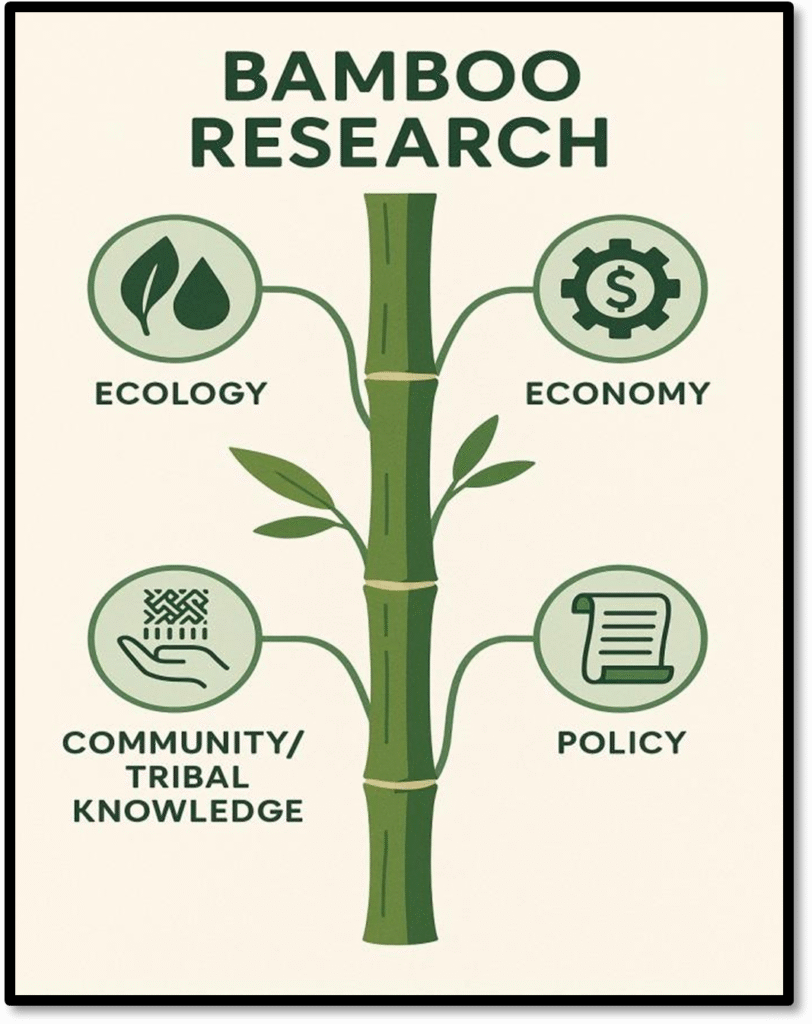
1.1 The “Green Gold” of Maharashtra: An Introduction to Bamboo
The rationale for this report is grounded in the need for a comprehensive, Maharashtra-centric analysis of the bamboo story. While the global conversation around bamboo’s benefits is growing, a granular understanding of its role within a specific, climatically and culturally distinct region like Maharashtra is crucial. This study aims to fill this critical gap. We’re not just looking at bamboo; we’re looking at Maharashtra’s bamboo, a unique narrative shaped by local geography, history, and community.
This research is not merely an academic exercise; it is a strategic blueprint. By systematically evaluating the state of bamboo cultivation, its economic value chain, and the human element—especially the role of tribalcommunities—we can provide a roadmap for the future. The information presented here can empower policymakers to formulate effective legislation, enable entrepreneurs to create innovative businesses, and provide farmers with the knowledge to cultivate a crop that promises both environmental and financial returns. As a wise environmentalist once quipped, “You can’t manage what you don’t measure.” This report is our yardstick.
Chapter 3: The Ecological and Economic Landscape of Bamboo in Maharashtra
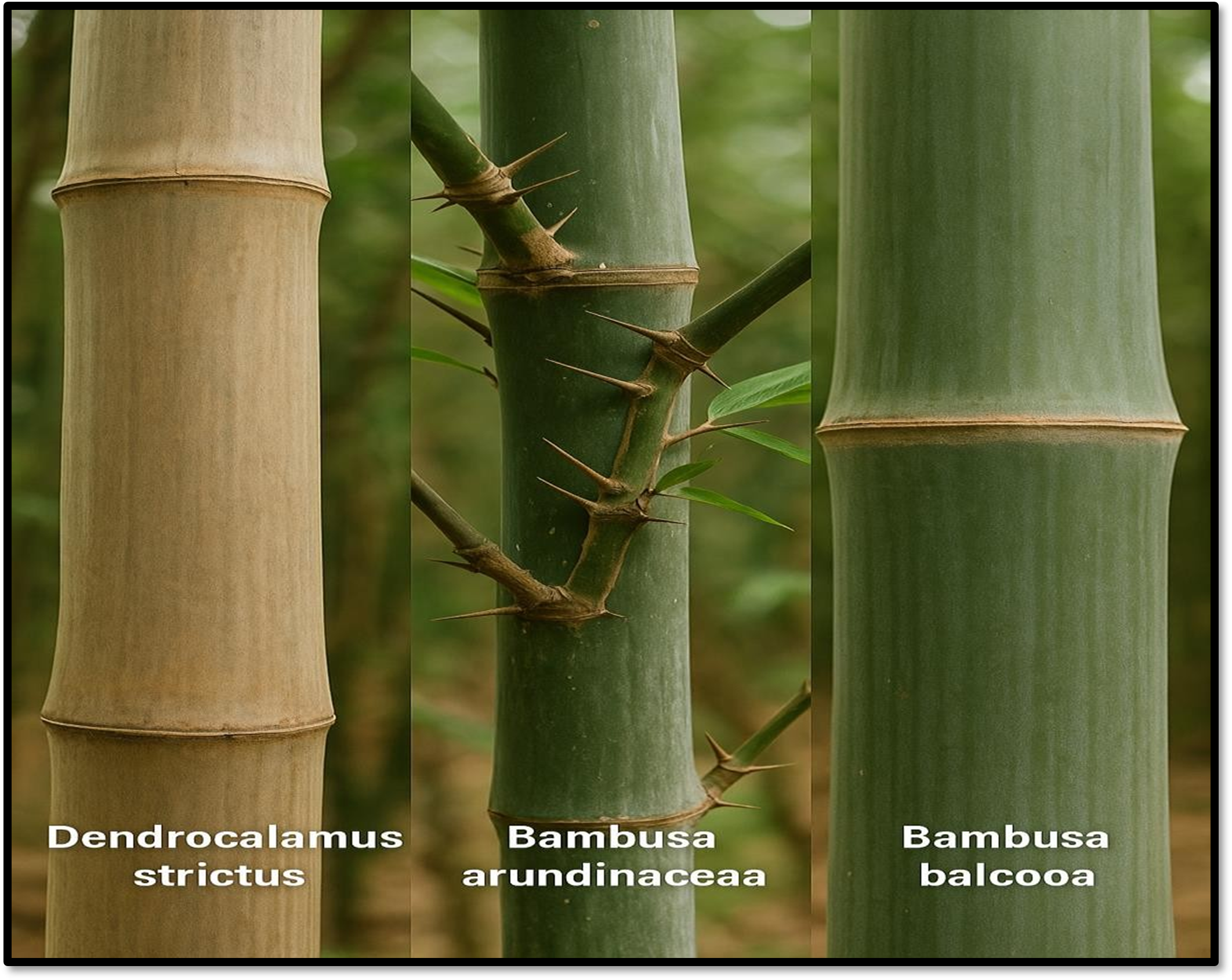
3.1 Bamboo Species in Maharashtra: A Tryst with Diversity
Maharashtra’s diverse agro-climatic zones, ranging from the moist Western Ghats to
the semi-arid Deccan plateau, provide a fertile ground for a fascinating array of bamboo
species. This botanical diversity is not merely a scientific curiosity; it is the very foundation
of the state’s bamboo potential. Each species, with its unique characteristics, offers distinct
applications, making Maharashtra a veritable smorgasbord for bamboo enthusiasts and
entrepreneurs alike. It’s like a specialized toolkit Mother Nature has provided, with each
culm designed for a specific purpose.
3.1 Bamboo Species in Maharashtra: A Tryst with Diversity
Maharashtra’s diverse agro-climatic zones, ranging from the moist Western Ghats to
the semi-arid Deccan plateau, provide a fertile ground for a fascinating array of bamboo
species. This botanical diversity is not merely a scientific curiosity; it is the very foundation
of the state’s bamboo potential. Each species, with its unique characteristics, offers distinct
applications, making Maharashtra a veritable smorgasbord for bamboo enthusiasts and
entrepreneurs alike. It’s like a specialized toolkit Mother Nature has provided, with each
culm designed for a specific purpose.
Among the prominent species found thriving in Maharashtra are:
- Dendrocalamus strictus (Male Bamboo or Solid Bamboo): This is perhaps the most widespread and economically significant species in the state. Known for its solid or nearly solid culms (stems), Dendrocalamus strictus boasts exceptional strength and durability. Its high density makes it the preferred choice for heavy-duty applications 13 such, as construction scaffolding, sturdy furniture, and agricultural implements. It’s the muscle of the bamboo family, tough as nails and incredibly reliable.
- Bambusa arundinacea (Thorny Bamboo or Spiny Bamboo): True to its name, this species is characterized by its thorny branches, forming dense, impenetrable clumps. While its thorns might deter a casual embrace, they make it an excellent choice for protective fencing, live hedges, and erosion control. Its culms, though less robust than Dendrocalamus strictus, are used for basketry and paper pulp. It’s the bodyguard of the forest, prickly but purposeful.
- Bambusa balcooa (Female Bamboo): Valued for its large-diameter, thick-walled culms, Bambusa balcooa is increasingly recognized for its high yield and rapid growth. It’s particularly suited for industrial applications such as ply-bamboo, laminate flooring, and especially for the pulp and paper industry. It represents the larger, more prolific side of the bamboo spectrum, providing bulk and speed where needed.
Other species like Bambusa vulgaris and Oxytenanthera stocksii also contribute to the state’s
bamboo mosaic, each adding a unique texture to the ecological and economic fabric.
Understanding these distinct personalities is crucial for optimizing cultivation and
maximizing their utility.

3.2 The Environmental Guardian: Ecological Roles of Bamboo
One of its most critical roles is in soil erosion control. The extensive, fibrous root and
rhizome systems of bamboo form a dense subterranean mat that binds soil effectively,
preventing runoff and landslides,
particularly in the hilly terrains of
the Western Ghats and floodprone riverbanks. This natural
engineering marvel stabilizes
slopes and protects vulnerable
ecosystems, acting as an unsung
sentinel against the relentless
forces of nature.
Beyond its physical stabilization,
bamboo is a prodigious carbon
sequesterer. Numerous studies
indicate that bamboo forests
absorb significantly more carbon
dioxide (CO2) and release more
oxygen than an equivalent stand of
broadleaf trees. This makes it an
indispensable asset in
14
Maharashtra’s efforts to mitigate climate change. A bamboo plantation isn’t just a patch of
green; it’s a powerful carbon capture facility, silently working overtime to purify our air. Its
rapid growth cycle means this sequestration process is both swift and continuous, making it
an ideal choice for large-scale reforestation and afforestation programs. Moreover, bamboo
contributes to biodiversity by providing vital habitats and food sources for various wildlife
species, further enriching the ecological health of the region.
3.3 The Economic Engine: Bamboo’s Market Potential
The economic narrative of bamboo in Maharashtra is transitioning from a story of subsistence
to one of substantial growth and diversification. The market potential of “green gold” is vast,
spanning multiple sectors and offering significant opportunities for job creation and rural
development. It’s not just a plant; it’s a burgeoning industry waiting for its full bloom.
The market can be broadly categorized:
- Construction and Infrastructure: Dendrocalamus strictus and Bambusa balcooa are particularly suited for this sector. Applications range from scaffolding (a traditional and effective use) to modern engineered bamboo products like flooring, plywood, panels, and even entire prefabricated homes. The strength-to-weight ratio of bamboo makes it an attractive, sustainable alternative to conventional building materials.
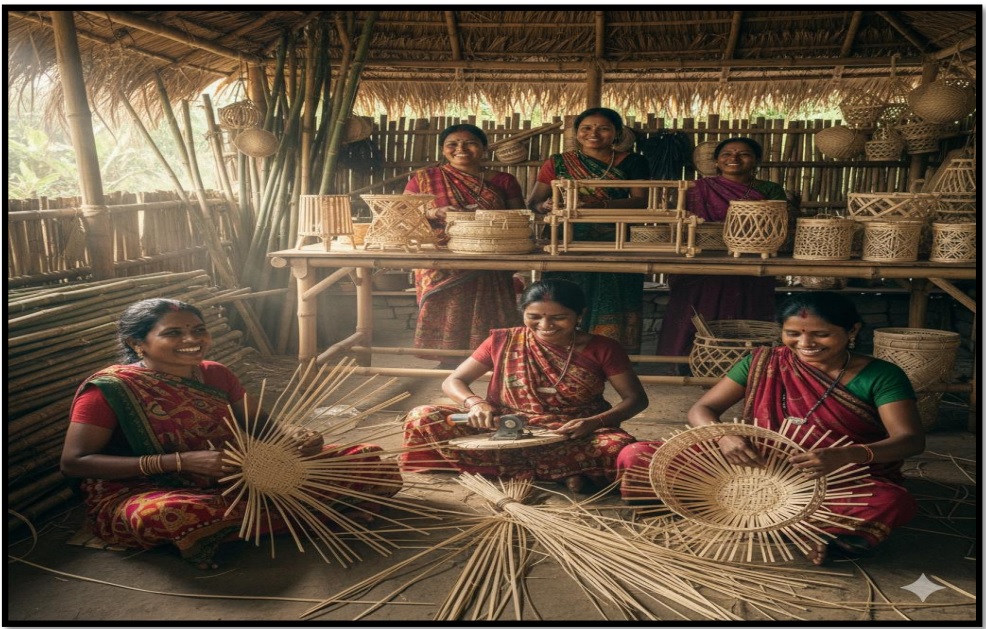
- Handicrafts and Artisanal Products: This is where the cultural heritage of Maharashtra truly shines. Skilled tribal artisans transform bamboo into exquisite baskets, mats, decorative items, traditional musical instruments, and intricate furniture. With proper design intervention and market linkages, these products can fetch premium prices, enhancing the livelihoods of rural communities. This is where tradition meets trade, beautifully.
- Textiles: The cellulose extracted from bamboo can be processed into soft, breathable, and highly absorbent fibers used for textiles. Bamboo fabrics are gaining popularity for clothing, bed linens, and towels due to their sustainable origins and desirable properties.
- Pulp and Paper: With its rapid growth and high biomass yield, bamboo is an excellent source for pulp, offering a sustainable alternative to wood in the paper industry. Bambusa balcooa is a strong contender in this segment.
- Food and Agri-products: Bamboo shoots are a delicacy in many Asian cuisines, known for their tender texture and nutritional value. As health-conscious consumers seek new and sustainable food sources, processed bamboo shoots (canned, pickled, or fresh) present a niche but growing market opportunity in Maharashtra. “Eating your greens” takes on a whole new, delightful meaning with bamboo shoots.
- Bioenergy: The high biomass content of bamboo also positions it as a potential feedstock for bioenergy production, contributing to renewable energy goals.
Chapter 4: The Human Element: Tribal Contributions and Social Dynamics
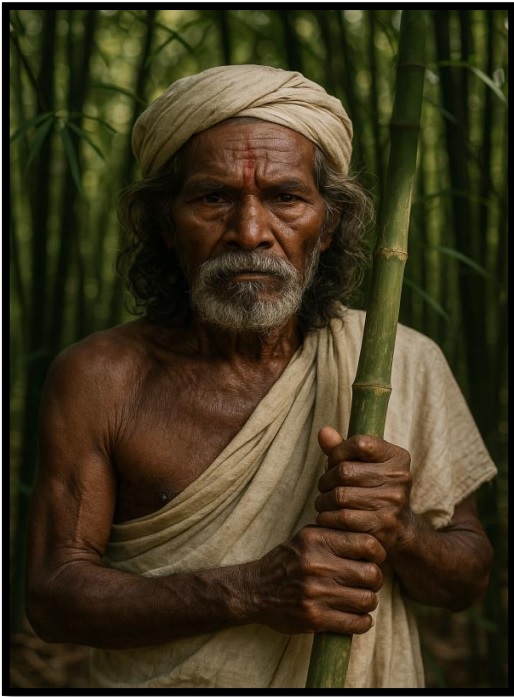
4.1 The Custodians of the Forest: Tribal Communities and Bamboo
When we speak of bamboo’s legacy in Maharashtra, it is impossible to separate the story of
the plant from the people who have coexisted with it for generations. The state’s tribal
communities—including the Gond, Kolam, and Korku tribes, particularly in regions like
Gadchiroli, Gondia, and Vidarbha—are not just users of bamboo; they are its true custodians.
They possess a profound, intimate knowledge of
this resource that modern science is only now
beginning to document. Their relationship with
the forest is not one of ownership, but of
reciprocity. They take what they need, and in
return, they act as guardians of the ecosystem.
It’s a sustainable living philosophy that makes
most corporate “green” initiatives look like a
mere hobby.
These communities have long depended on
bamboo for a diverse range of purposes, from
daily necessities to cultural expressions. For
them, bamboo is a vital source of raw material
for housing, agricultural tools, hunting
equipment, and cooking utensils. The Gond
tribe, for instance, has a rich tradition of crafting
everything from simple mats to intricate
ceremonial artifacts using bamboo. This deepseated reliance has fostered a symbiotic
relationship where the preservation of bamboo
forests is directly linked to their survival and cultural identity.
4.2 Traditional Knowledge and Sustainable Practices
The traditional knowledge of Maharashtra’s tribal communities concerning bamboo is a
treasure trove of sustainable practices that have been refined over centuries. This wisdom
goes far beyond basic craftsmanship; it encompasses a deep understanding of silviculture and
sustainable harvesting. For example, they know precisely which culms to harvest—typically
the mature, older ones—to ensure the health and regeneration of the bamboo clump. They
also have an intuitive grasp of seasonal cycles, understanding when bamboo is at its peak
16
strength and when it is too young to be cut.
This knowledge is often passed down orally from one generation to the next, with skills like
weaving and shaping being a central part of tribal identity. These practices stand in stark
contrast to the often unsustainable, clear-cutting methods of commercial forestry. The tribal
way is not about exploiting the forest for short-term gain, but about managing it for long-term
health. It’s an approach that respects the plant’s life cycle and ensures a continuous supply for
both the community and the ecosystem. We’ve got a lot to learn from people who, for
thousands of years, have managed to stay in business without sending a single memo.

4.3 Socio-Economic Empowerment: From Raw Material to Livelihood
For many tribal communities in Maharashtra, bamboo has historically been a source of
informal, subsistence-level income. They would collect and process bamboo to create simple
products for local use or sell them to middlemen for a pittance. However, this dynamic is
changing. With the right support, bamboo has the potential to become a powerful engine for
socio-economic empowerment, transforming these communities from mere suppliers of raw
material into self-reliant entrepreneurs.
Organizations like the VRUSHTI FARMERS PRODUCER CO. LTD (Womb To Tomb)
in the Gondia region and RESUME FOUNDATION IN NAGPUR (Non – Government
Organization) have demonstrated the immense potential of this shift. They work directly
with tribal artisans, providing skill upgradation in making high-value products like furniture,
jewelry, and modern handicrafts. Crucially, they also help these artisans gain direct access to
markets, bypassing exploitative middlemen and ensuring a fairer share of the profits. This
journey from a traditional artisan to a modern entrepreneur is a profound one. It not only
increases income but also instills a sense of pride, ownership, and self-confidence, ensuring
that the legacy of bamboo craftsmanship endures and thrives in the modern world.
Chapter 5: Food by Bamboo: A Culinary Exploration and Market Frontier

5.1 The Edible Gold: Bamboo Shoots as a Delicacy
While the world often celebrates bamboo for its structural prowess and environmental virtues,
its role in global gastronomy is a story less told, yet equally compelling. For centuries, across
Asia and increasingly worldwide, bamboo shoots have been revered as a culinary delicacy, a
versatile vegetable that adds a unique crunch and subtle flavor to countless dishes. This isn’t
just a panda’s preferred snack; it’s a gourmet ingredient that has graced tables from humble
village kitchens to Michelin-starred restaurants. It’s truly the “edible gold” of the plant
kingdom, proving that sometimes, you can eat your way to sustainability.
Bamboo shoots are the young, tender culms
that sprout from the ground before hardening
into the familiar woody stalks. These nascent
shoots are harvested at a very specific stage of
their growth – typically when they are just a few
inches to a foot tall, before they develop a bitter
taste or fibrous texture. The flavor profile is
delicate, often described as a mild sweetness
with a slightly earthy undertone, and a
satisfyingly crisp texture that holds up well in
cooking. Rich in fiber, vitamins, and minerals,
and notably low in calories and fat, bamboo
shoots are not just delicious; they are a
nutritional powerhouse, aligning perfectly with
modern health and wellness trends.
5.2 Traditional Preparations and Regional Variations in Maharashtra
In Maharashtra, particularly among tribal and rural communities living in close proximity to
bamboo forests, the consumption of bamboo shoots is a deeply ingrained culinary tradition.
This isn’t a recent fad; it’s a gastronomic heritage passed down through generations, a
testament to resourcefulness and local wisdom. These communities have perfected various
methods of preparing bamboo shoots, transforming them into a staple that reflects regional
tastes and available ingredients.
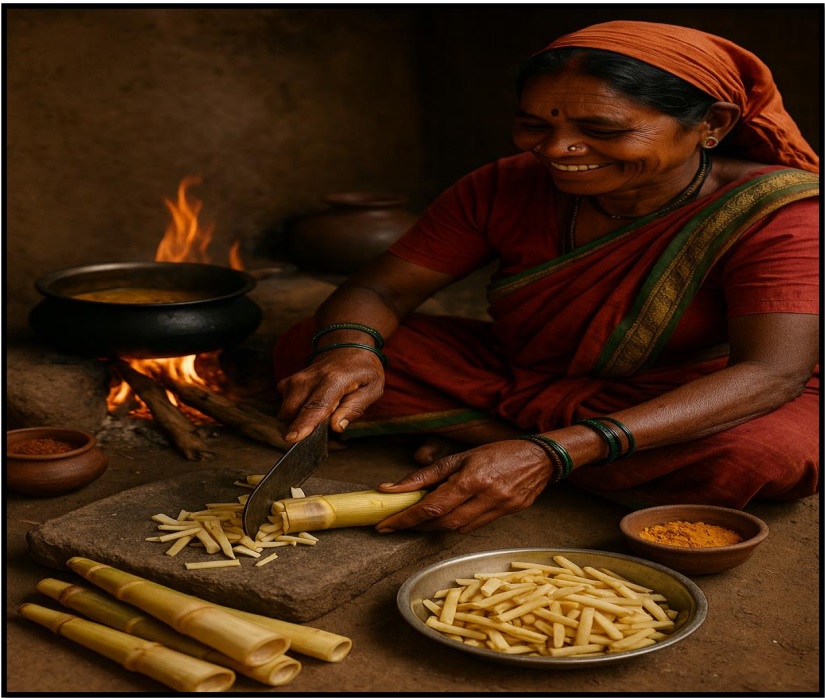
One common preparation involves pickling the shoots. Fresh bamboo shoots are sliced or
shredded, then fermented in brine with spices, chili, and local herbs. This method not only
preserves the shoots for extended periods but also develops a complex, tangy flavor that
complements staple diets. In some areas, stir-fries and curries featuring bamboo shoots are
popular, often combined with local vegetables, lentils, or even small game. The shoots absorb
the flavors of the spices and gravies, while retaining their signature crunch.
Beyond these, bamboo shoots find their way into traditional soups and stews, offering a
refreshing texture contrast. The process often involves boiling the raw shoots multiple times
to remove any bitter compounds and then incorporating them into dishes. This careful
preparation highlights the intimate knowledge these communities hold about local bamboo
varieties and their safe, delicious consumption. It’s a culinary art form rooted in both
necessity and profound understanding of nature’s bounty.
5.3 Market Potential and Modern Culinary Applications
The market for bamboo shoots, once largely confined to local consumption and specialized
Asian grocery stores, is now expanding rapidly. As consumers become more adventurous and
health-conscious, seeking out natural, plant-based, and sustainable food options, bamboo
19
shoots are perfectly positioned for mainstream culinary adoption. Maharashtra, with its
significant bamboo resources, stands at the cusp of leveraging this emerging market.
On the domestic front, there’s a growing demand for processed bamboo shoot products
such as canned, vacuum-packed, or frozen shoots, offering convenience and year-round
availability. Food manufacturers are exploring bamboo shoots for ready-to-eat meals, healthy
snacks, and even as an ingredient in fusion cuisine. Think bamboo shoot pakoras or
innovative bamboo-infused chutneys!
Internationally, the export market for bamboo shoots is robust, particularly to East and
Southeast Asian countries where they are a culinary staple. With proper quality control,
packaging, and adherence to international food safety standards, Maharashtra can become a
significant supplier. Furthermore, as chefs and food innovators globally look for unique and
sustainable ingredients, bamboo shoots offer a distinctive texture and mild flavor profile that
can be incorporated into a vast array of modern dishes, from salads and pastas to even
innovative desserts. The culinary world, it seems, is just beginning to scratch the surface of
bamboo’s gastronomic genius. It’s a delicious journey, and Maharashtra is ready to serve.

Chapter 6: Challenges, Opportunities, and Policy Framework

6.1 Hurdles on the Path: Challenges in the Bamboo Sector
Despite its immense potential, the bamboo sector in Maharashtra is not without its share of
formidable challenges. These hurdles have historically hindered the full-scale commercial
and environmental harnessing of this remarkable plant, and they must be addressed
strategically for future growth. As the old saying goes, “A smooth sea never made a skilled
sailor,” and the bamboo industry is currently
navigating some choppy waters.
One of the most significant challenges has
been the lack of an organized supply chain
and market linkages. For decades, bamboo
cultivation has been fragmented, with smallscale farmers and tribal communities selling
their raw material to a chain of middlemen.
This informal structure results in low prices
for the cultivators, minimal returns on their
hard work, and a lack of consistent supply
for large-scale industries. In essence, the
product is in high demand, but the system to
get it from point A to point B is still running
on a dial-up connection.
Furthermore, policy barriers have
historically stifled the sector’s growth. Until
the landmark reclassification in 2017,
bamboo was legally defined as a “tree” under the Indian Forest Act of 1927. This
classification imposed strict regulations on its cultivation, harvesting, and transportation.
Farmers had to obtain permits and navigate bureaucratic red tape, which made commercial
bamboo farming a daunting and often unviable enterprise. While this has been addressed at a
national level, a streamlined and farmer-friendly state-level policy framework is still needed
to fully unlock bamboo’s potential.
Lastly, there is a prevailing lack of modern processing and value-addition infrastructure.
The majority of bamboo harvested is still used for low-value products like scaffolding and
basic handicrafts. The state has limited facilities for converting raw bamboo into high-value
engineered products like flooring, composites, and high-quality textiles. This forces the
industry to remain at the bottom of the value chain, exporting raw material rather than
finished goods, which is like selling crude oil instead of refined gasoline.
6.2 Seizing the Moment: Opportunities for Growth and Innovation
Where there are challenges, there are opportunities, and the bamboo sector in Maharashtra is
brimming with them. The global push for sustainable, eco-friendly alternatives presents a
22
golden opportunity to position Maharashtra as a leader in the bamboo economy. As the world
moves away from single-use plastics and carbon-intensive materials, bamboo stands ready to
take its place.
One of the most promising opportunities lies in skill development and technological
upgradation. By investing in training programs for farmers and artisans, the state can foster
a skilled workforce capable of producing high-quality, value-added products. This includes
introducing modern techniques for bamboo treatment, processing, and design. The transition
from traditional craftsmanship to industrial-grade manufacturing is a key step towards
attracting larger markets
Another major opportunity is the development of a robust value chain. This involves
creating farmer producer organizations (FPOs) and cooperatives that can collectively manage
plantations, handle post-harvest processing, and directly market their products. This not only
empowers the cultivators but also ensures a consistent and traceable supply for industries,
building a trustworthy and efficient system.
Finally, there is an immense opportunity in brand building and market promotion. By
creating a premium “Maharashtra Bamboo” brand that guarantees sustainability and quality,
the state can command higher prices in both national and international markets. This includes
leveraging digital platforms for e-commerce and showcasing the products at global trade
shows. It’s time to change the narrative: from a “poor man’s timber” to a “smart man’s
material.”
6.3 The Role of Government and Non-Governmental Organizations
The full potential of bamboo in Maharashtra cannot be realized without a concerted,
collaborative effort from both the government and non-governmental organizations (NGOs).
They are the architects of the enabling environment, the silent partners in this green
revolution.
The government’s role is multifaceted. It must provide policy support, including simplified
regulations, subsidies for bamboo plantations, and tax incentives for processing units. It
should also facilitate access to finance for small and medium enterprises (SMEs) in the
bamboo sector. Furthermore, the government can act as a catalyst by establishing Bamboo
Technology Parks and common facility centers where artisans and entrepreneurs can access
shared machinery for processing and value-addition.
NGOs and social enterprises, on the other hand, are the boots on the ground. They are crucial
for community mobilization and capacity building, working directly with tribal
communities and rural farmers to impart skills, foster sustainable practices, and create market
linkages. They play a vital role in building trust and bridging the gap between traditional
knowledge and modern business practices. A perfect partnership between government policy
and grassroots action is the recipe for success.
Chapter 7: Case Studies and Success Stories

7.1 A Glimpse of the Future: Innovative Bamboo-Based Enterprises
While the challenges facing the bamboo sector in Maharashtra are real, they have not deterred
a new generation of entrepreneurs and visionaries. They are proving that bamboo is not just a
raw material; it is a foundation for innovative, high-value enterprises. These success stories
serve as powerful proof-of-concept, demonstrating what’s possible when traditional
knowledge meets modern technology and business acumen. It’s the difference between seeing
a plant and seeing a gold mine.
One shining example is VRUSHTI FARMERS PRODUCER CO . LTD . , a VIDARBHA
-based enterprise that has successfully carved out a niche in the consumer goods market. .
They specialize in creating elegant and eco-friendly alternatives to single-use plastic, such as
bamboo toothbrushes, speakers, and stationery. Their business model is not just about making
products; it’s about changing consumer behavior. By positioning bamboo as a stylish and
sustainable choice, they are proving that going green doesn’t mean compromising on
aesthetics or functionality.
Another notable success is the work being done in the field of bamboo housing and
construction. In parts of rural Maharashtra, architects and engineers are collaborating with
local artisans to build durable, affordable, and aesthetically pleasing bamboo homes. These
structures are not only resilient but also have a significantly lower carbon footprint than
traditional concrete buildings. This innovation is a testament to bamboo’s remarkable strength
and versatility, proving it’s capable of being the skeleton of our homes as well as the soul of
our planet.
7.2 Community-Led Initiatives: Lessons from the Field
The most profound success stories are those that empower the very people who have
safeguarded the bamboo legacy for centuries: the tribal communities. These initiatives
demonstrate that true development is bottom-up, not top-down. It’s a grassroots movement
where communities are not just passive recipients of aid, but active participants in their own
economic destiny.
A prime example is the VRUSHTI FARMERS PRODUCER CO. LTD (Womb To Tomb)
in the Gondia region. This Organization has been instrumental in training local tribal
communities, particularly women, in modern bamboo processing and craft. They’ve shifted
the focus from making simple, low-value products to intricate furniture, decorative items, and
even musical instruments that meet the standards of urban markets. By creating a direct link
between the artisans and the consumers, SBK ensures that the profits return to the
community, bypassing exploitative middlemen. This model has transformed the lives of
countless families, proving that empowerment is a far more powerful force than charity.
Similarly, the work done by RESUME FOUNDATION , a social organization in the Nagpur
district, is another beacon of hope. They have focused on reviving traditional bamboo craft
and integrating it with contemporary designs. They have not only provided skill training but
also established a collaborative platform for artisans to share knowledge and collectively
bargain for better prices. These community-led initiatives are not just about business; they are
about restoring dignity, preserving cultural heritage, and building a sustainable future. After
all, if a plant can be a team player, why can’t we?
Chapter 8: Conclusion and Recommendations
8.1 Synthesizing the Saga: A Summary of Findings
This report has embarked on a comprehensive journey through “The Bamboo Story” in
Maharashtra, revealing a narrative far richer and more complex than a simple plant’s life
cycle. We’ve established that bamboo is not merely a botanical curiosity but a powerful
ecological, economic, and social force in the state. From its unique identity as the world’s
largest grass to its deep roots in Indian history and culture, bamboo’s saga is one of
remarkable resilience and versatility.
Our findings reveal a significant, yet largely untapped, potential. Ecologically, bamboo
stands as a climate change hero, effectively sequestering carbon and preventing soil erosion,
particularly in Maharashtra’s vulnerable terrains. Economically, its transition from a raw,
low-value material to a high-value commodity is underway, with innovative enterprises and
products challenging outdated perceptions. Most importantly, we’ve highlighted the crucial
27
role of tribal communities, who are the true guardians of this resource. Their traditional
knowledge and sustainable practices are a blueprint for the future, proving that the most
effective solutions are often those passed down through generations.
The journey, however, is not without its obstacles. We’ve identified a fragmented supply
chain, a lack of modern processing infrastructure, and historical policy barriers as key
hurdles. But these challenges are merely catalysts for action. The global demand for
sustainable products, coupled with a growing awareness of bamboo’s benefits, presents a
moment of unprecedented opportunity for Maharashtra.
8.2 Charting the Future: Recommendations for Sustainable Development
Based on our findings, we propose a set of targeted recommendations to unlock the full
potential of Maharashtra’s bamboo sector, ensuring it benefits both the people and the planet.
These are not merely suggestions; they are a strategic roadmap for a greener, more
prosperous future.
- Establish a Robust Value Chain: The state government, in partnership with NGOs and the private sector, should focus on creating Farmer Producer Organizations (FPOs). These FPOs would collectively manage bamboo cultivation and harvesting, and establish common facility centers equipped with modern processing machinery. This will eliminate middlemen, ensure fair prices for cultivators, and provide a consistent, quality-controlled supply for industry.
- Invest in Skill Development and Technology Transfer: We recommend the creation of specialized training programs for rural and tribal communities. These programs should combine traditional craft knowledge with modern techniques for bamboo treatment, design, and product manufacturing. The goal is to transform artisans into entrepreneurs, capable of producing high-value goods that can compete in global markets.
- Promote and Brand “Maharashtra Bamboo”: A concerted marketing and branding effort is essential to elevate the product’s status. The state should launch a “Maharashtra Bamboo” campaign, certifying products that meet specific sustainability and quality standards. This will build consumer trust and create a premium brand identity, attracting both domestic and international buyers.
- Strengthen Policy and Research: While national policy has eased, the state must streamline its own regulations to make bamboo cultivation and trade more farmerfriendly. Furthermore, increased funding for research into new bamboo species and innovative applications (such as in bio-composites and textiles) is crucial to maintain a competitive edge.
1.3 Objectives of the Research
This research is driven by a clear set of objectives, each designed to paint a holistic picture of the bamboo sector in Maharashtra:
- To provide a detailed botanical and historical overview of bamboo cultivation in Maharashtra. This includes identifying the major species native to the state, their unique characteristics, and their historical use. To assess the ecological benefits of bamboo, specifically focusing on its role in carbon sequestration and soil erosion control.
- To analyze the economic value chain, from cultivation and harvesting to processing and marketing, and identify the key market opportunities for high-value bamboo products.
- To document and highlight the invaluable contribution of tribal communities in the sustainable management of bamboo resources and their role as knowledge keepers.
- To identify key challenges and policy gaps that hinder the growth of the bamboo sector in the state.
- To propose actionable recommendations that can foster a sustainable, inclusive, and profitable bamboo-based economy in Maharashtra.
Chapter 2: The Botanical and Historical Context of Bamboo
2.1 A Grass, Not a Tree: The Botany of Bamboo
To truly appreciate the “bamboo story,” one must first understand its botanical identity. Despite its towering stature and woody appearance, bamboo is not a tree. It’s a member of the grass family (Poaceae), specifically the subfamily Bambusoideae. This classification is a game-changer. Unlike trees that grow in girth each year, bamboo culms (stems) emerge from the ground at their full, mature diameter. This means a tiny shoot that pops up from the soil is destined to be as thick as its parents, growing upward at a breathtaking pace. Some species can grow up to 3 feet in just 24 hours. This is why you never see a bamboo forest that looks like it’s growing; it just seems to appear out of nowhere. It’s a botanical magic trick.
The key to this incredible growth lies in its extensive underground network of rhizomes. This system functions like a subterranean superhighway, storing nutrients and energy. It allows bamboo to spread and multiply rapidly, creating a single, interconnected organism that is remarkably resilient. This is also the reason for the distinction between “clumping” and “running” bamboo, a detail that anyone considering planting this botanical speedster should remember. The former is a polite guest, staying put in a tight bunch, while the latter is a free-spirited wanderer, spreading its rhizomes far and wide.

2.2 Bamboo’s Ancient Saga in India: A Historical Perspective
Bamboo is not a new celebrity in the world of
plants; it’s an ancient sage. Its relationship with
the Indian subcontinent dates back thousands of
years. Archaeological evidence points to its use by
early civilizations for tools, weapons, and
structural materials. It has been a silent partner in
human progress, a testament to its versatility and
abundance.
Beyond its physical applications, bamboo is
deeply ingrained in Indian culture and mythology.
It is mentioned in ancient scriptures and epics,
often symbolizing longevity, resilience, and
fertility. The flexibility and upright growth of
bamboo have long been metaphors for a virtuous
life—one that bends but does not break under
pressure. In many parts of the country, it is
considered a sacred plant. Its deep roots in Indian
history make it more than just a resource; it is a
part of the national heritage.
2.3 The Bamboo Legacy in Maharashtra: A Regional History
In Maharashtra, bamboo’s history is a rich and living narrative. Historically, it has
been the primary building material for rural households, providing everything from walls
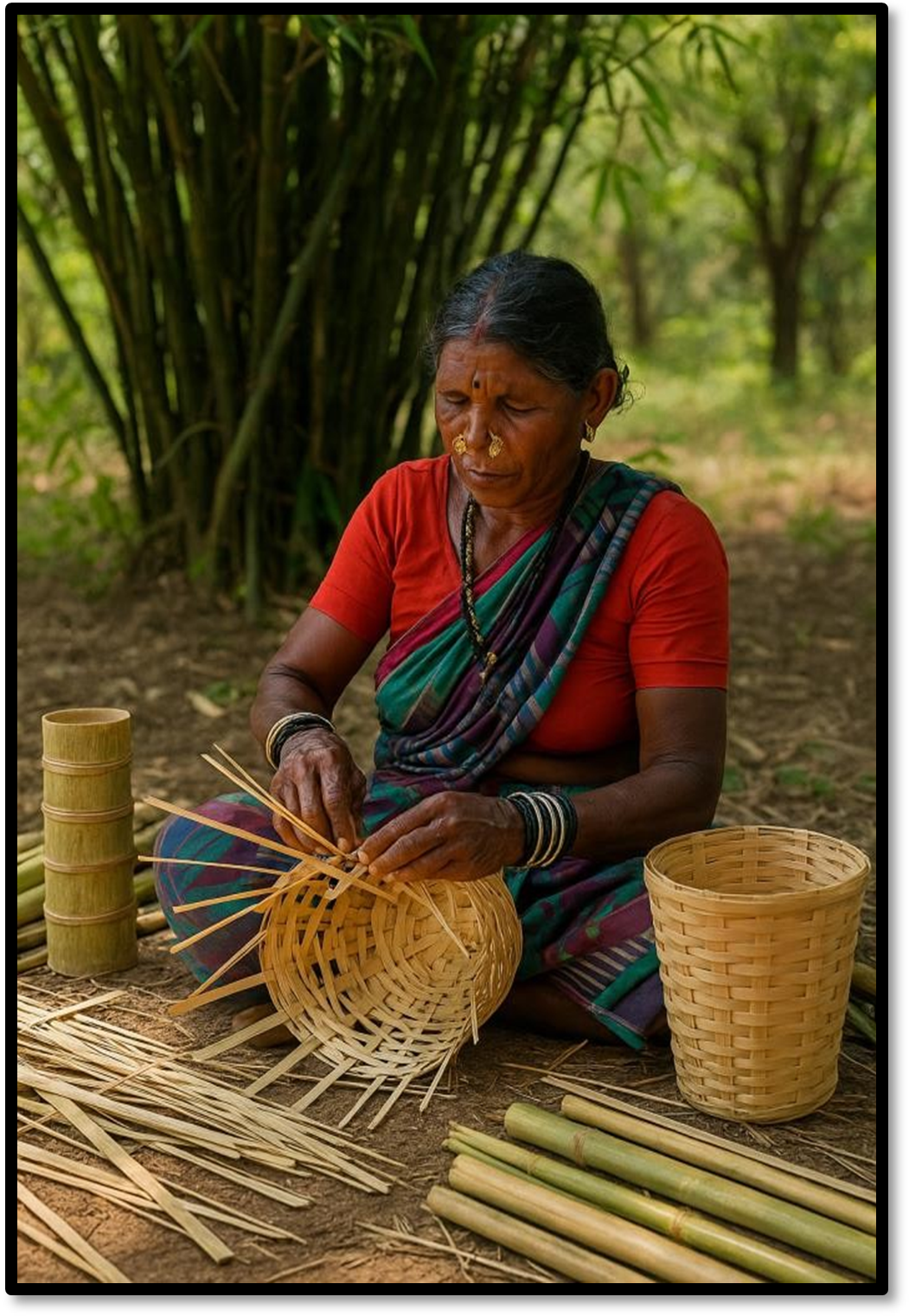
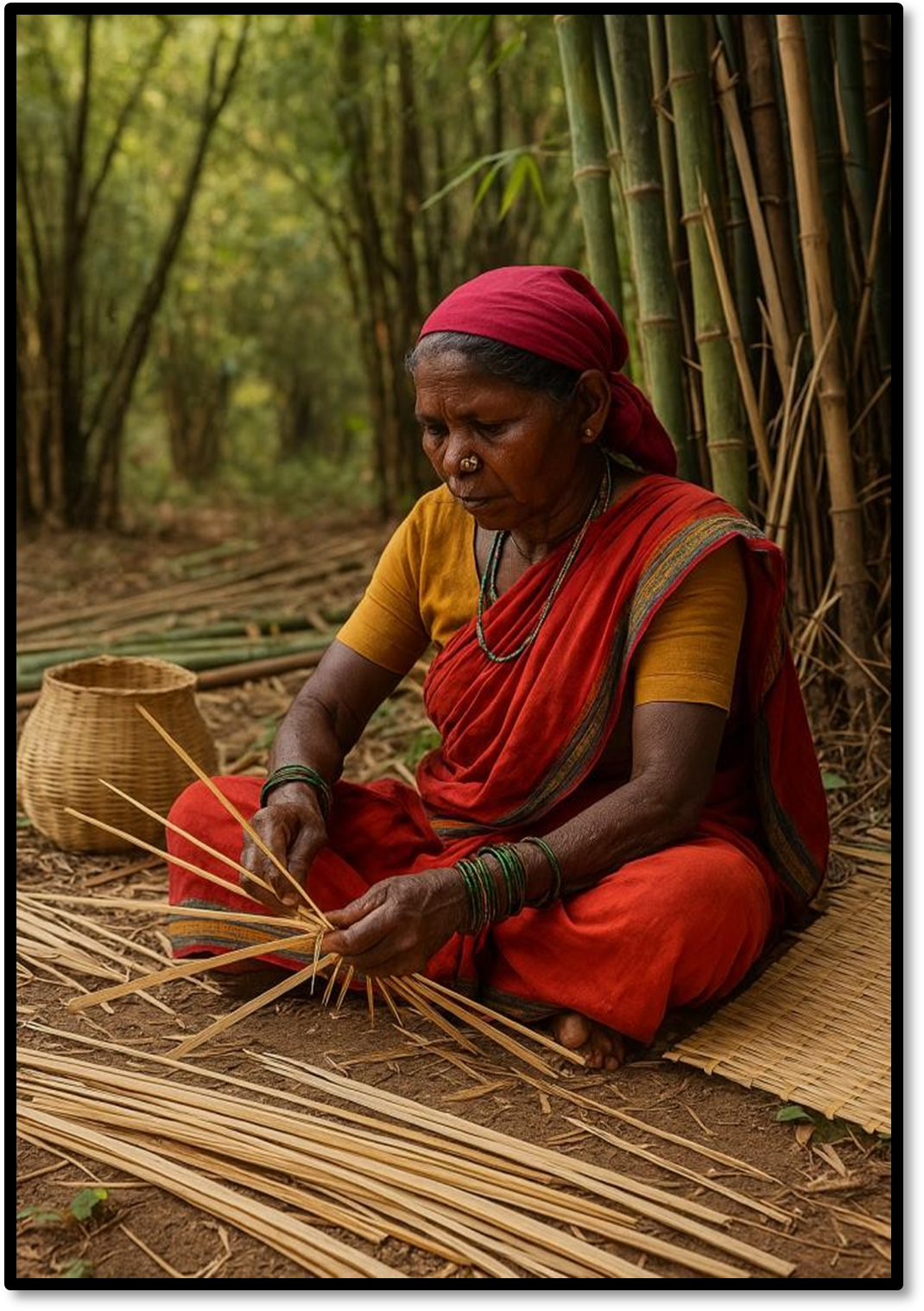
and roofs to fences and scaffolding. Local artisans have perfected the craft of working
with bamboo, passing down techniques for weaving baskets, crafting musical instruments
like the bansuri, and creating agricultural tools. This traditional knowledge is a valuable
resource, a living library of sustainable practices.
The legacy of bamboo is particularly strong among the state’s tribal communities.
These communities, the true custodians of the forests, have an intricate knowledge of
different bamboo species, their specific uses, and the optimal time for harvesting to
ensure forest health. For them, bamboo is not merely a commodity; it is a lifeline, a
source of sustenance, and a medium for artistic expression. Their contribution has ensured
that bamboo cultivation in Maharashtra is not just an industry but a sustainable and
culturally significant practice. Their hands have literally shaped the bamboo legacy of the
state, turning a plant into a tradition.